Empowering statisticians to participate in AI research and leadership
A year of milestones, innovation, and community growth
December 2025
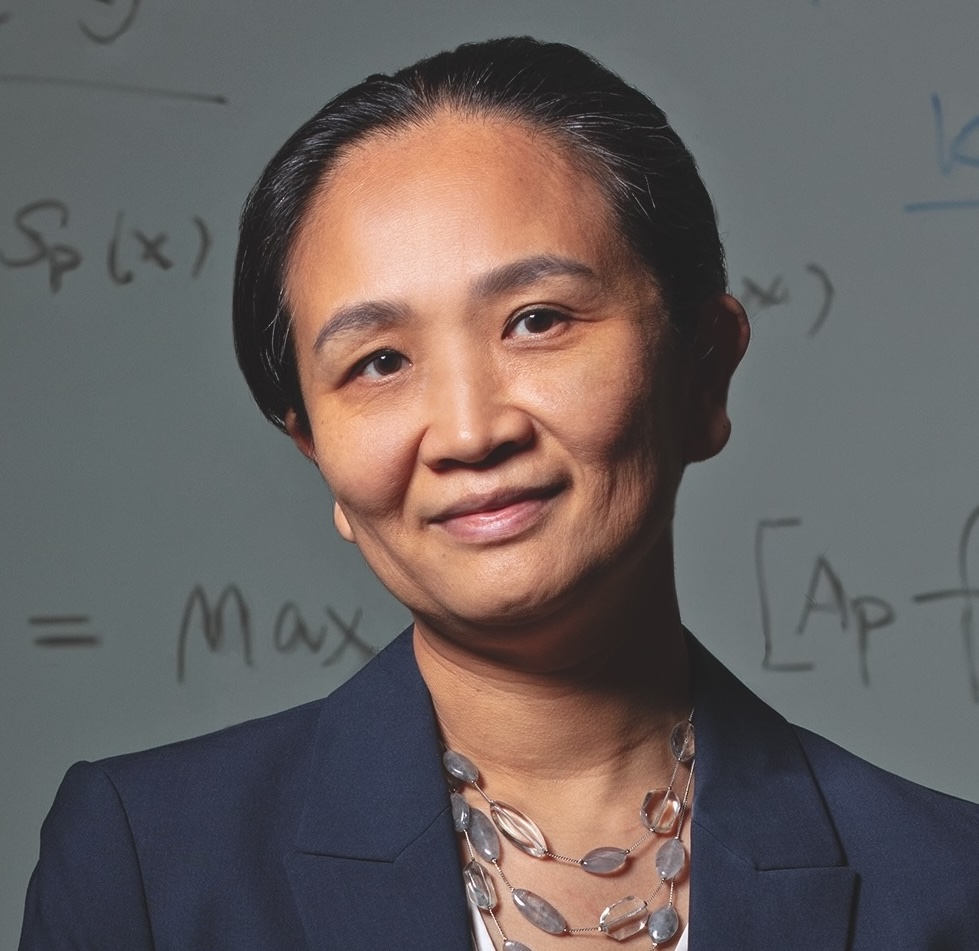
As we close out 2025, I want to take a moment to reflect on the mission of StatsUpAI — and what the name means to convey. It is an invitation to action: let's elevate the role of statistics in shaping the future of artificial intelligence. It's a nod to rigor, and to a vision of AI that is principled, transparent, and grounded in data-driven understanding.
This year has been a remarkable one as you will learn from reading this newsletter. Each of these accomplishments reflects not just what we've built, but who has built it — a dedicated, generous, and vibrant network of researchers, students, educators, and practitioners.
To all of you: thank you for being part of the StatsUpAI community. Your engagement, curiosity, and collaboration have been the foundation of everything we've achieved.
And to the volunteers who have worked behind the scenes — building our website and social media contents, curating resources, and handling countless logistics — your quiet leadership has powered this momentum. We truly could not have done this without you.
Looking ahead to 2026, we're excited to continue building, learning, and growing — together.
Warmest wishes for the new year,
Tian Zheng
Chair, StatsUpAI
Columbia University
The rapid expansion of artificial intelligence has fundamentally reshaped how data are generated, analyzed, and interpreted across scientific disciplines. In this evolving landscape, the role of statistics has never been more critical—not only to improve model performance, but to ensure reliability, interpretability, and principled decision-making in AI-driven research.
Against this backdrop, 2025 marked a defining year for StatsUpAI. Recognized as an official Interest Group by the American Statistical Association (ASA), StatsUpAI has emerged as a growing community for advancing statistically grounded AI research. This milestone reflects a shared commitment within our community to place statistical rigor, uncertainty quantification, and methodological transparency at the core of modern AI development.
In 2025, our theme was AI in health data science. StatsUpAI highlighted research and collaboration spanning neuroimaging, genomics, electronic health records, and clinical trials. By highlighting statisticians who are leaders in these interdisciplinary fields, StatsUpAI promotes approaches that are not only powerful, but also trustworthy, reproducible, and clinically meaningful—demonstrating how statistics continues to shape the future of health data science in the AI era.

2025 marked a major milestone for StatsUpAI within the American Statistical Association (ASA).
On January 30, 2025, StatsUpAI was formally approved as an Interest Group of the American Statistical Association (ASA). This milestone marks StatsUpAI's integration into the ASA community as a dedicated forum for advancing statistical foundations, methodological rigor, and uncertainty-aware AI research—particularly in health and biomedical data science.
The Steering Committee brings together leading statisticians and data scientists across institutions to guide the mission, activities, and scientific direction of StatsUpAI within the ASA community.
A three-day conference co-hosted with Iowa State University and the National Institute of Statistical Sciences, bringing together researchers at the intersection of AI and statistical science.
A business meeting held during JSM 2025, including Steering Committee updates, discussion of future initiatives, and networking.
In 2025, StatsUpAI organized twelve online seminars focused on statistical and AI methods for health data science, with a particular emphasis on neuroimaging and the analysis of fMRI and EEG data. The seminar series attracted strong engagement from the community, with the inaugural session drawing over 120 participants.
The Statistical and AI Methods for Health Data Science series featured speakers from leading institutions, including Johns Hopkins University, Emory University, KAUST, and Stanford University. Topics spanned functional neuroimaging, reproducible neuroscience, and data-driven methodological advances, fostering interdisciplinary exchange across statistics, AI, and biomedical research.
In 2025, StatsUpAI conducted a series of in-depth interviews with leading scholars and research teams, covering emerging topics such as tumor heterogeneity analysis, cross-disciplinary research in statistics and AI, and biomedical knowledge graphs.
These interviews highlighted recent methodological and scientific advances while providing the community with first-hand perspectives on current research frontiers and future directions in data-driven biomedical science.
In 2025, StatsUpAI organized and supported high-quality short courses covering cutting-edge topics in statistics, AI, and their applications. These courses provide researchers and practitioners with opportunities to deepen their understanding of modern methodologies and their real-world applications.
An in-depth tutorial on decision intelligence in two-sided marketplaces, emphasizing reinforcement learning and sequential decision-making for long-term optimization.
Zhiwei (Tony) Qin, Chengchun Shi, Hongtu Zhu
A comprehensive course exploring modern deep learning architectures—including CNNs, RNNs, GANs, and Transformers—and their applications to challenging statistical problems in biomedical sciences.
Spring 2026 Offering • UNC Biostatistics
A five-day intensive program exploring cutting-edge applications of AI in healthcare and medical research, featuring distinguished faculty and cutting-edge presentations.
May 12-16, 2025 • Duke University
Hosted by Prof. Jian Pei
An introduction to large language models and their applications in statistics and data science, covering foundational concepts and practical implementations.
Linjun Zhang, Rutgers University
Exploring opportunities and research topics in applying large language models to statistical and data science challenges.
Linjun Zhang, Rutgers University
StatsUpAI.org continuously provides high-quality open-source resources to the community. Our resource library encompasses review articles, dataset information resources, and processing pipelines, offering researchers comprehensive support from theory to practice.
Over the past year, we have continuously expanded our resource library, adding multiple review articles covering cancer research, electronic health records, genetics, medical imaging, and other fields. We have also curated information on 83 datasets across 9 major categories and 4 standardized processing pipelines, providing researchers with access to dataset metadata and resources for health data science research.
Reflecting on 2025, StatsUpAI made substantial progress as a growing academic community. Key milestones—including recognition as an ASA Interest Group, the organization of academic events, and the development of shared resources—underscore our continued efforts to advance statistically grounded AI research.
Looking ahead, we will continue to focus on:
Connecting researchers and practitioners worldwide through more seminars, conferences, and training workshops, fostering interdisciplinary collaboration and knowledge sharing.
Continuously updating and expanding review articles, datasets, and processing pipelines to provide the community with more comprehensive and cutting-edge research resources.
Supporting cutting-edge research at the intersection of statistical methods, AI technologies, and emerging applications, driving theoretical breakthroughs and practical impact.
Nurturing the next generation of statisticians and data scientists through educational programs and mentorship initiatives, passing on professional knowledge and innovative spirit.
Thank you to all community members for your support and participation. Let us look forward to even greater achievements for StatsUpAI in 2026!
Pageviews: